
Basement Waterproofing in Beavercreek, OH
Basement waterproofing in Beavercreek comes down to one thing more than any other: the water table. This fast-growing Greene County suburb, one of the largest in the Dayton area, sits over the region’s buried-valley aquifer, a deep bed of sand and gravel that holds and moves enormous amounts of groundwater beneath the surface. That same water that makes the area’s wells productive also sits high against foundations, and Beavercreek’s newer poured-concrete basements feel it as steady hydrostatic pressure. Dayton Basement Pros keeps these homes dry by managing the groundwater directly, rather than waiting for it to find the weak point in a wall.
Why Beavercreek Basements Take On Water
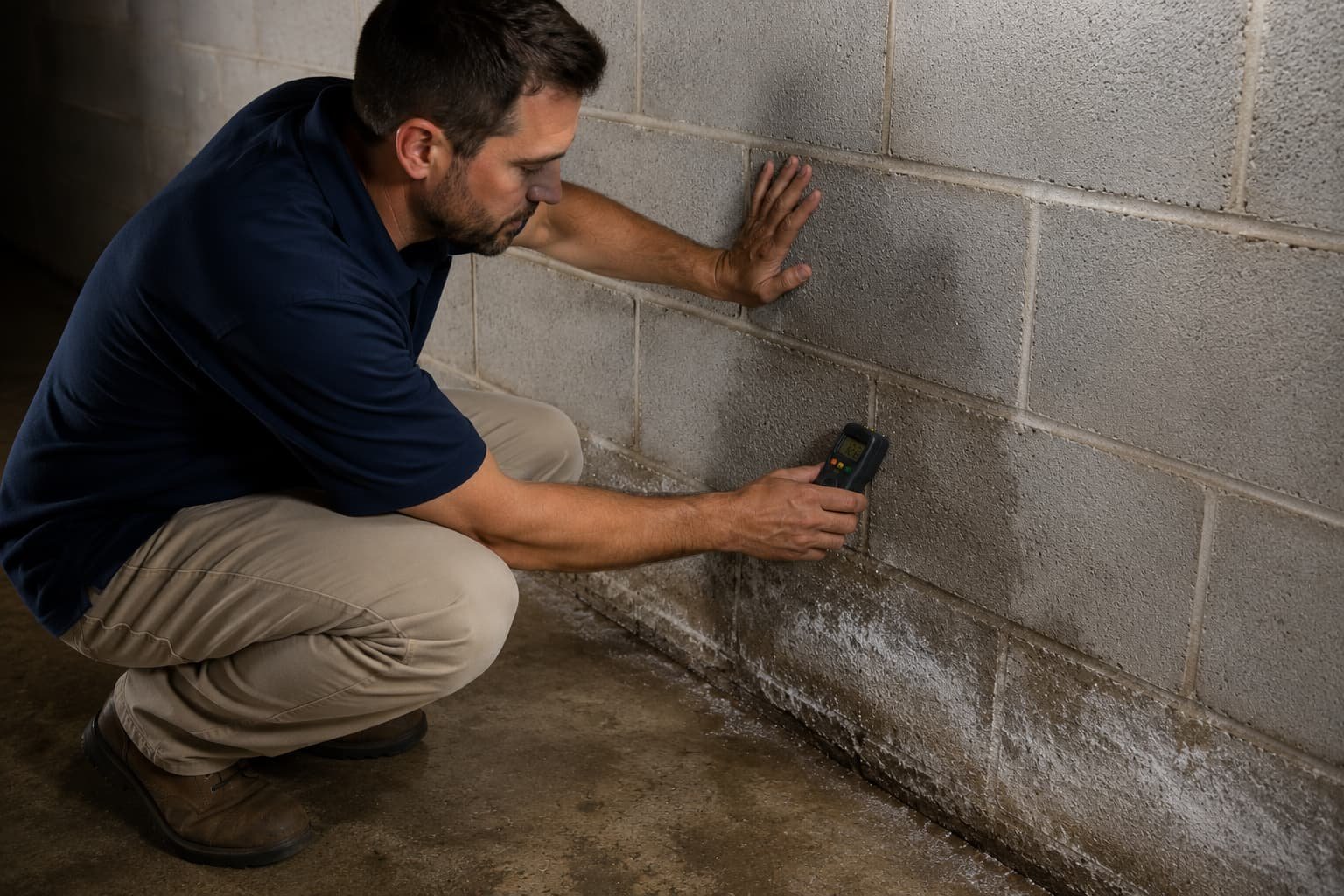
Unlike Dayton’s older block-foundation neighborhoods, much of Beavercreek went up during decades of rapid growth on poured-concrete walls. Poured walls are strong, but they have a predictable weakness: the cove joint where the wall meets the floor, along with any form ties or shrinkage cracks. When the buried-valley aquifer rises after a wet season, water presses up under the slab and in at that cove joint with nowhere else to go. The low ground around Little Beaver Creek and the Beaver Creek Wetlands keeps the water table high across much of the city, and in newer subdivisions where the final grading is still settling, surface water often runs toward foundations instead of away. The sandy ground drains fast in some spots and traps water in others, so two houses on the same street can behave completely differently. A high water table is also a flood-risk factor, and FEMA’s resources on protecting your property from flooding point to controlling groundwater and drainage as the foundation of keeping a home dry.
Newer Homes Are Not Immune
Many Beavercreek homeowners assume a house built in the last few decades is too new to have a water problem. Over this aquifer, that isn’t how it works. A poured wall keeps water out only as long as the pressure behind it stays low, and when the water table climbs, a fifteen- or twenty-year-old basement seeps at the cove joint just like an older one. The difference is that newer homes more often have finished basements, so the first sign is a damp smell, buckled flooring, or a water stain behind drywall rather than an obvious puddle.
Signs Your Beavercreek Basement Needs Waterproofing
- Water seeping in at the cove joint where the floor meets the wall after wet weather
- A sump pump that runs constantly through spring, or never seems to keep up
- Damp spots or staining on an otherwise sound poured-concrete wall
- Hairline shrinkage cracks in the wall that weep during heavy rain
- Humidity and a damp smell in a relatively new finished basement
Our Basement Waterproofing Services in Beavercreek
We build the system around Beavercreek’s high water table:
- Interior drainage systems that intercept groundwater at the footing before it reaches the cove joint
- Sump pump installation with battery backup, essential where the water table runs high
- Foundation crack repair for shrinkage cracks and form-tie leaks in poured walls
- Exterior waterproofing when the wall is taking on water from outside
- Complete basement waterproofing systems tailored to the aquifer conditions
Local Experience That Matters in Beavercreek
Waterproofing a poured-wall home over a high water table is a different job from sealing an old block basement, and the sump system is usually the centerpiece rather than an afterthought. We size drainage and pumps for the volume of groundwater Beavercreek soils actually carry, and we route the discharge far enough from the house that it doesn’t simply soak back through the sandy soil to the foundation. We also plan backup power, because the heaviest storms — the ones that raise the water table fastest — are also the ones most likely to cut electricity. Every assessment starts by finding where your home sits in that patchwork of fast-draining and water-trapping ground, so the system fits your lot, not a generic spec.
Serving Beavercreek and the Surrounding Area
Dayton Basement Pros waterproofs basements across Beavercreek, from the newer subdivisions near the Mall at Fairfield Commons to the established neighborhoods toward the Beaver Creek Wetlands and the Greene County line. Wherever your home sits over the aquifer, we’ll keep the groundwater out.
If your Beavercreek sump runs nonstop, your cove joint weeps after every storm, or your newer basement never feels quite dry, the water table is the reason — and it isn’t going away on its own. Request a free estimate and we’ll design a system built for it.